
Blogging about Ebooks
Small Business Startup Checklist That Works
Jun
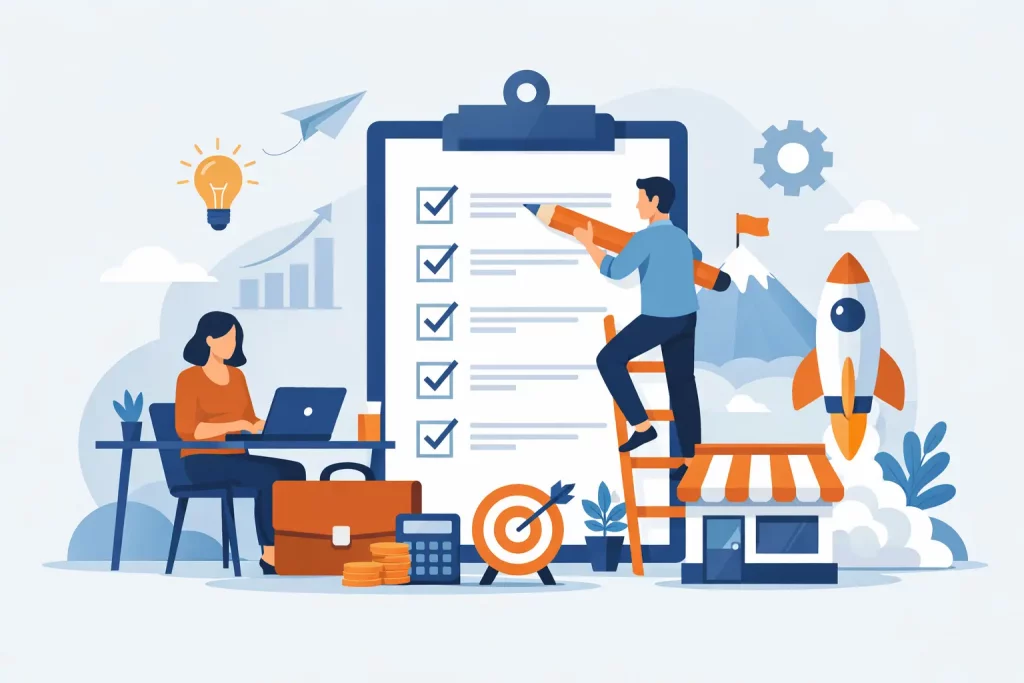
Starting a business usually feels clear for about five minutes. You pick a name, imagine your first sale, and maybe even picture quitting your day job. Then the real questions show up fast: What do you need to register, how much money should you set aside, and what has to happen before you can actually open for business? A solid small business startup checklist keeps that early momentum from turning into expensive guesswork.
This is not about building the perfect business on paper. It is about getting the fundamentals right so your first year is easier to manage, less stressful, and more likely to produce real income.
A small business startup checklist should start with the problem
Most new owners begin with what they want to sell. A better first move is asking what problem people already want solved. That sounds simple, but it changes everything from pricing to marketing.
If you can describe the customer problem in one sentence, you are in a stronger position. Maybe it is busy parents who need affordable meal prep, local homeowners who want reliable lawn care, or online shoppers looking for a niche product they cannot find easily. Specific beats broad almost every time.
This is also the stage where honesty matters. Some ideas are exciting but hard to sell. Others are less glamorous but easier to validate and easier to operate. A business does not need to be flashy to be profitable.
Validate the idea before you spend heavily
A lot of startup mistakes happen because people spend before they learn. They pay for branding, inventory, software, or a polished website before confirming that anyone will buy.
Validation can be simple. Talk to potential customers. Ask what they currently use, what frustrates them, and what they would pay to get a better result. If possible, pre-sell, run a small test batch, or offer a limited version first.
This is where trade-offs come in. If you wait too long, you can talk yourself out of starting. If you spend too early, you can lock yourself into an idea the market does not want. The goal is not perfect certainty. The goal is enough evidence to move forward with confidence.
Know your numbers before you launch
Many people start a business because they want more freedom, but money confusion removes freedom quickly. Before launch, estimate your startup costs, monthly expenses, expected pricing, and how many sales you need to break even.
You do not need a complicated financial model. You do need realistic numbers. Include permits, equipment, packaging, payment processing, software, shipping, rent if it applies, and taxes. Then add a buffer. New businesses almost always cost more than expected.
Pricing deserves special attention. New owners often underprice because they are trying to attract buyers fast. That can work short term, but it creates a harder problem later when you need to raise rates. Price based on costs, market expectations, and the value of the result you provide – not just fear of losing the sale.
Choose a business structure and handle legal basics
This part is not the most exciting, but it matters. Your legal setup affects taxes, paperwork, and personal liability. Depending on your business, you may operate as a sole proprietorship, form an LLC, or choose another structure that fits your plans.
What makes sense depends on your state, your risk level, and whether you are launching alone or with a partner. A simple setup may be enough at the beginning, while other businesses benefit from more protection from day one. If you are unsure, this is one of the few areas where getting informed early can save money and stress later.
You should also confirm what registrations, licenses, permits, and tax requirements apply where you live. Requirements vary a lot by state, city, and industry. A home-based online shop has different needs than a food business, a childcare business, or a mobile service business.
Keep your records organized from the start. Save receipts, track expenses, and separate business activity from personal finances. Even if your business is small, treating it like a real business from day one makes growth much easier.
Open separate business finances immediately
One of the smartest items on any small business startup checklist is opening a dedicated business bank account as soon as possible. Mixing personal and business money creates confusion fast. It makes bookkeeping messy, taxes harder, and decision-making less reliable.
You should also choose how you will accept payments. That might mean card processing, invoicing software, online checkout, or a point-of-sale system. Pick what matches how your customers want to buy.
Convenience matters here. If paying you feels complicated, some buyers will leave. The easier and more secure the process is, the more likely you are to convert interest into revenue.
Build the simplest version of your offer
Many businesses overbuild early. They launch with too many products, too many packages, or too many custom options. That usually creates confusion for both the owner and the customer.
Start with a focused offer. What is the clearest thing you can sell that solves one real problem? For some businesses, that is one signature service. For others, it is a small set of products instead of a giant catalog.
Simple offers are easier to explain, market, fulfill, and improve. Once customers respond, you can expand. Starting narrow is not thinking small. It is making smart choices with limited time and money.
Set up your brand basics without getting stuck there
You need a business name, a basic visual identity, and clear messaging. You do not need to spend months obsessing over fonts or rewriting your tagline twenty times.
What matters most is clarity. People should understand what you sell, who it is for, and why it is useful. If your branding looks decent and your message is easy to follow, that is enough to start.
A lot of owners hide in branding work because it feels productive and low risk. The harder work is getting in front of customers. Branding supports the sale. It should not replace it.
Create a practical launch plan
Launching is not just opening your doors and hoping people show up. You need a simple plan for how people will hear about you.
For most small businesses, that means choosing one or two channels you can use consistently. Depending on the business, that could be local networking, community groups, email, short-form content, referrals, online marketplaces, or search-based traffic. Trying to be everywhere at once usually leads nowhere.
Think in terms of a repeatable path. How does a stranger become aware of you, trust you, and make a first purchase? If that path is vague, your marketing will feel random.
It also helps to decide what kind of launch you are doing. Some businesses benefit from a quiet start where the owner tests systems with a few early customers. Others need a more visible push right away. Neither approach is automatically better. It depends on your capacity, your market, and how ready your offer really is.
Prepare your operations before the first sale
Getting a customer is only part of the job. You also need a way to deliver what you promised without scrambling every time.
That includes your fulfillment process, customer communication, packaging if relevant, response times, return or refund expectations, and any templates or systems that save time. A business that looks good from the outside but runs chaotically behind the scenes burns energy fast.
This does not need to be complicated. A few simple processes can make a huge difference. Write down the steps for what happens after an order comes in. Note where delays could happen. Fix those weak points before volume exposes them.
Plan for marketing after launch, not just at launch
A common mistake is treating launch like the finish line. In reality, launch is the starting point. You need a plan for continued visibility once the initial excitement fades.
That means collecting customer feedback, asking for referrals when appropriate, tracking what messages lead to sales, and improving based on results. The businesses that last are usually not the ones with the biggest opening splash. They are the ones that keep showing up and keep learning.
This is also where practical education pays off. Many owners need help with pricing, budgeting, productivity, or early-stage business decisions, and a useful guide can shorten the learning curve. For readers who like building with clear, actionable information, SmartChoicesEbooks.com reflects that same focus on practical knowledge that helps people move with more confidence.
Watch for the checklist trap
Checklists are helpful, but they can also become a form of procrastination. Some tasks are essential before launch. Others can wait until the business is making money.
You probably do need legal basics, separate finances, a defined offer, and a clear way to get paid. You probably do not need a polished office, a full product line, or every automation tool available.
A useful checklist creates momentum. A bloated checklist creates delay. If a task does not reduce risk, improve the customer experience, or help you make sales, question whether it belongs before launch.
Starting a business will never feel completely tidy. There will always be a few unknowns, a few decisions you revisit, and a few lessons you only learn once customers are involved. The point of a strong checklist is not to eliminate uncertainty. It is to help you begin with fewer blind spots and better choices, so your business has room to grow into something stable, useful, and worth the work.