
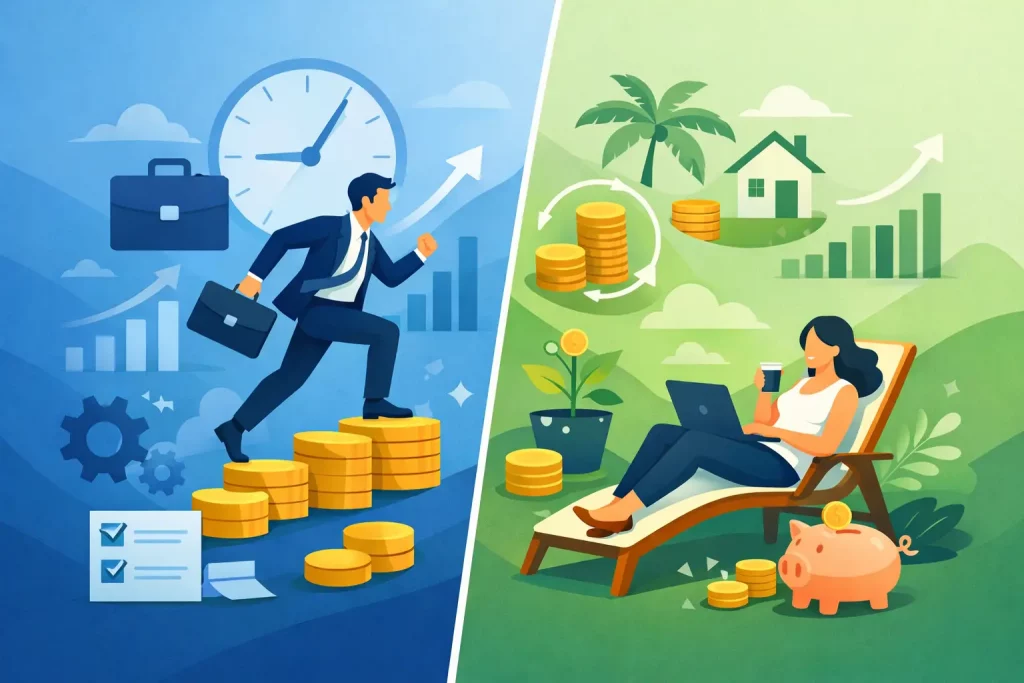
A paycheck can feel dependable until an unexpected expense, reduced work hours, or a job change reminds you of one basic fact: most earnings stop when your work stops. That is the heart of active income vs passive income. One pays you for your time and effort now; the other can keep producing value after the initial work, investment, or setup.
Neither type of income is automatically better. Active income often provides the fastest path to cash flow, while passive income can create more flexibility over time. The smart choice is to understand what each one requires, then build a plan that fits your current budget, skills, responsibilities, and goals.
What Is Active Income?
Active income is money you earn by doing ongoing work. If you clock in, serve clients, complete projects, make sales, or perform a service to get paid, that is active income. A full-time salary, hourly wages, freelance work, consulting, tips, commissions, and many side hustles all fall into this category.
The advantage is clear: active income is usually more immediate. You do the work, meet the requirements, and receive payment. For someone paying down debt, building an emergency fund, or covering everyday expenses, that reliability matters.
The limitation is that active income is often tied directly to your availability. There are only so many hours in a week. Taking time off may reduce your earnings, and growing your income may require a raise, more clients, higher rates, or longer hours.
That does not make active income a bad deal. It is often the foundation that makes every other financial move possible. A steady job can help you save, invest, learn new skills, and take measured risks without putting your household finances under pressure.
What Is Passive Income?
Passive income is money earned from an asset, system, or product that continues to generate revenue with limited day-to-day involvement after the initial setup. The phrase “limited involvement” is important. Passive income is rarely no-work income.
Common examples include interest from savings or bonds, dividend payments from qualifying investments, rental income, royalties, and earnings from digital products created once and sold repeatedly. A downloadable guide, for example, may take significant research, writing, editing, and promotion before it earns its first dollar. After it is available for purchase, each additional sale may require far less effort than creating it did.
Some passive income sources require money upfront. Others require time, knowledge, or creative effort. Many require all three. They can also involve maintenance, taxes, customer questions, market changes, and periods when income is lower than expected.
The value of passive income is not that it lets you avoid work. Its value is that it can reduce the strict connection between every dollar earned and every hour worked.
Active Income vs Passive Income: The Real Trade-Off
The most useful comparison is not “easy versus hard.” Both can be demanding. The real differences are speed, risk, control, and scalability.
Active income usually starts faster. You may be able to pick up extra shifts, offer a service, or take on freelance work this month. You typically know what you need to do to earn money, and you can often estimate how much you will make.
Passive income usually takes longer to build. You might need to save capital, create a product, study an investment, establish an audience, or develop a repeatable process. Early results can be modest, and there is no guarantee that a promising idea will produce consistent returns.
Active income gives you more direct control over the immediate result. If you complete the work, you are generally paid according to the agreed terms. Passive income has greater potential to scale, but it can be affected by factors you do not fully control, such as demand, interest rates, tenant vacancies, platform policies, or investment performance.
For most people, the strongest approach is not choosing one side. It is using active income to create stability while gradually building income sources that are less dependent on your daily hours.
Build the Foundation Before Chasing “Passive” Money
Before investing heavily in a new income idea, get clear on your financial basics. A practical foundation protects you from making rushed decisions because a trend promised fast results.
Start by tracking what comes in and what goes out each month. You do not need a complicated system. Knowing your essential expenses, debt payments, savings goals, and available cash gives you a realistic starting point.
Next, prioritize an emergency cushion if you do not already have one. An emergency fund can keep a car repair or medical bill from becoming high-interest debt. It also gives you more freedom to explore a side business, education, or investment opportunity without relying on it to work immediately.
Then look at high-interest debt. Paying it down may offer a more certain financial benefit than chasing an uncertain return elsewhere. This does not mean you must wait until every financial goal is complete before learning about passive income. It means your plan should match your risk level.
Practical Ways to Add Income Without Overextending Yourself
The right next step depends on what you have more of right now: time, money, useful skills, or knowledge you can turn into a product.
If you need cash flow quickly, an active side income may be the better starting point. Consider work that uses skills you already have, such as tutoring, bookkeeping, writing, pet care, home organization, virtual assistance, or selling a specialized service. The goal is not to work every spare minute. It is to create a clear income target and protect your energy.
If you have savings and want a lower-maintenance option, learning the basics of interest-bearing accounts, bonds, diversified funds, or dividend-focused investments may be worth your time. Every investment carries trade-offs, and returns are never guaranteed. Understand fees, risk, taxes, and access to your money before committing funds.
If you have expertise, a digital product can be a middle ground between active and passive income. A useful checklist, planner, beginner guide, template, or short ebook may continue earning after creation, but it still needs a real audience and a clear solution to a real problem. The best products are specific. “Budgeting for first-time parents” is more useful than “money tips.”
At SmartChoicesEbooks.com, practical reading is treated as a tool for better decisions. That mindset is useful here: learn one focused skill, apply it, review the result, and make your next move based on what actually works.
Watch for the Passive Income Myths
Be careful with any opportunity that promises effortless, fast, or guaranteed income. A legitimate income stream should be understandable. You should know where the money comes from, what you are expected to do, what you could lose, and how long it may take to see results.
Passive income often has hidden work. Rental property can involve repairs and vacancies. Digital products require updates and marketing. Investments require patience and the ability to tolerate market changes. Licensing income depends on having work people want to use.
It also takes time to build meaningful results. Earning a few dollars in interest or making occasional product sales is still progress, but it may not replace a paycheck anytime soon. Small beginnings are normal. The goal is to build reliable habits and assets, not chase a dramatic overnight change.
A Simple Decision Framework
When considering a new income path, ask four questions. First, how soon do I need additional money? Second, how much time can I commit each week without harming my health, work, or family responsibilities? Third, how much financial risk can I afford? Finally, what knowledge or skills do I already have that solve a practical problem?
Your answers can guide the choice. Someone with limited savings and an urgent bill may need active income first. Someone with a stable budget and a long-term outlook may be ready to invest consistently. Someone with useful experience may be able to create a resource that earns over time.
The best financial plan is rarely flashy. It is built from steady active income, thoughtful spending, ongoing learning, and carefully chosen assets that give you more options later. Start with one realistic step you can sustain, because a plan that fits your life is the one most likely to keep working for you.